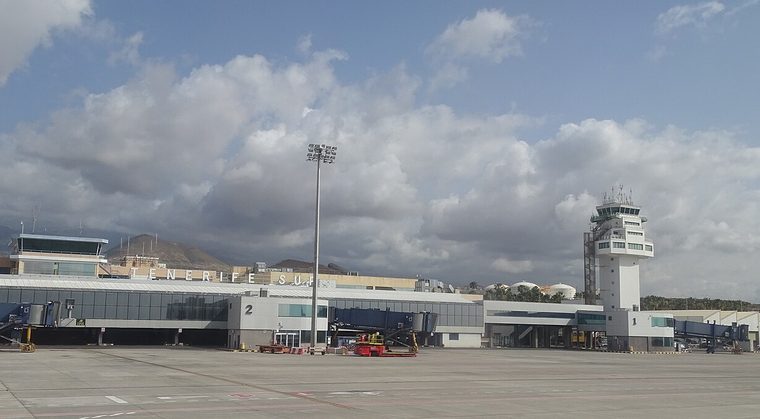
Getting around TFS
Tenerife Sur exists because the island’s older airport, Los Rodeos — today Tenerife Norte — "did not meet technical requirements due to adverse weather conditions", so in the late 1960s the island authorities began choosing a new site in the tourist south. Aena’s own history traces the land declared of public interest in May 1970, a construction budget of almost 450 million pesetas awarded in 1973, and an opening on 23 October 1978 to domestic traffic, then international from 2 November — with an Iberia DC-9 as the very first landing. Queen Sofía formally inaugurated it on 6 November 1978, which is also the name still on the terminal today: "Reina Sofía". Since then, Aena counts more than 140 million passengers through the airport, with 13,969,678 in 2025 alone, spread across 92,309 operations. Most of that traffic is international — the UK and Germany together account for over half of it, led by Manchester, Gatwick, Stansted, Birmingham and Bristol — while the busiest domestic links run to Madrid, Málaga, Gran Canaria and Barcelona. Inside, there is only one terminal building, split by floor rather than by letter: arrivals and baggage reclaim on the ground floor, check-in and boarding on the same ground floor, and the VIP lounge airside on the floor above that. And Tenerife’s other airport is never far from the story — Titsa’s line 343 runs directly between the two, with no stops, in 50 minutes.