Getting around UIO
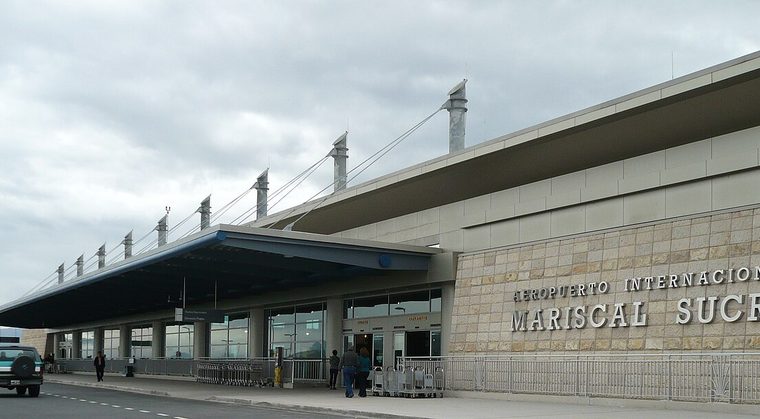
Mariscal Sucre International Airport sits in Tababela, a rural parish northeast of Quito that operator Quiport places 24 km from the capital — reached mainly by the Ruta Viva, a 17.1 km highway the city built with the explicit goal of serving the airport’s users, with the Interoceánica/E35 and the Vía Collas as the other road approaches. The move here happened over one weekend in February 2013: the old downtown airport, in use for 60 years, closed on the 19th and this one opened on the 20th, its former site turned into a public park. Built at 2,400 metres above sea level, the new airport got one of Latin America’s longest runways, 4,100 metres, under a 41-metre control tower. A $74 million, Quiport-funded expansion finished in 2025 added 17,600 m² to the single passenger terminal and 35,000 m² to the apron — reconfiguring Customs and modernising the baggage system to lift yearly capacity from 5 to 7 million — after the airport carried a preliminary 5.4 million passengers in 2025 on 12 airlines to 8 domestic and 14 international destinations.